 01 / 06Build.
Blockchain development
Smart contracts, dApps and protocol infrastructure on EVM chains and Solana.
Smart contracts & dApps · Layer 2s & appchains · Wallets & account abstraction
Blockchain engineering & smart contract audits
DeFi protocols, tokenized assets, stablecoins and custody, designed from a written spec and broken by invariant fuzzing before anyone else can.
Live from Ethereum mainnetMainnet feed paused, retrying
Building on

TOKEN2049Singapore · 7–8 October · Marina Bay Sands
We are at TOKEN2049 and around the city all week. Book 30 minutes with an engineer: bring your contracts, your token design or the agent you want to trust.
From the first contract to production operations, one team designs, builds and secures it.
All servicesExplore the full range of blockchain, security and AI services we build and run.
View all servicesFounders, fintechs, issuers and enterprises come to us when a mistake would be expensive.
Launch DeFi protocols, tokens and dApps with security designed in from the first commit.
Stablecoin rails, custody and crypto payments that reconcile with your existing books.
Tokenize funds, credit and property with investor eligibility enforced in the token itself.
Blockchain integration and AI agents connected to the systems your teams already use.
Most exploits are ordinary mistakes: , , . We make each of them fail a test long before it can fail on mainnet.
Illustrative example: each mistake made to fail a test, then fixed.
Example: withdraw() sends ETH before clearing the balance, so a reentrancy test withdraws twice the deposit. Moving the balance update above the external call makes the test pass.
The engineers who scope your project are the ones who design and build it. Nothing gets lost in a hand-off.
Written specs, invariant tests and fuzzing are part of the build, not a step bolted on before launch.
A written scope with assumptions spelled out, milestones you can see, and a demo at every step.
Code, tests, documentation and runbooks live in your repository from day one.
The same five steps on every project. Each one ends with something you can read, run or approve.
We learn the product, the users and what must never go wrong, then write it down as a specification.
You getArchitecture, threat model and a scoped plan with milestones, reviewed with you before code.
You getSmall, readable components with tests in every pull request and a demo at each milestone.
You getInvariant fuzzing, static analysis, fork tests and manual review. Findings arrive as tests you can run.
You getDeployment scripts, key ceremonies, monitoring and a runbook. We stay on after launch.
You getTwo client sites we built, running in production today. Scroll through them here, then open the real thing.
A home for a creator token and its ecosystem
SinghCoin connects social content, digital collectibles, events and token rewards. The site explains the ecosystem, introduces its new app, SlaySpace, and puts the SINGH token's on-chain details one click from BscScan.
A corporate site for a German software consultancy
BitNautics builds custom software, websites and automotive embedded systems from Rosbach, Germany. Their site presents three service lines, the team and open roles, and turns visitors into quote requests.
Client names stay private under NDA. The engineering is described as it was built.
A constant-product AMM with a staking module and cross-chain message passing, with invariant tests over every flow.
Illustrative interface, not a client screenshot.
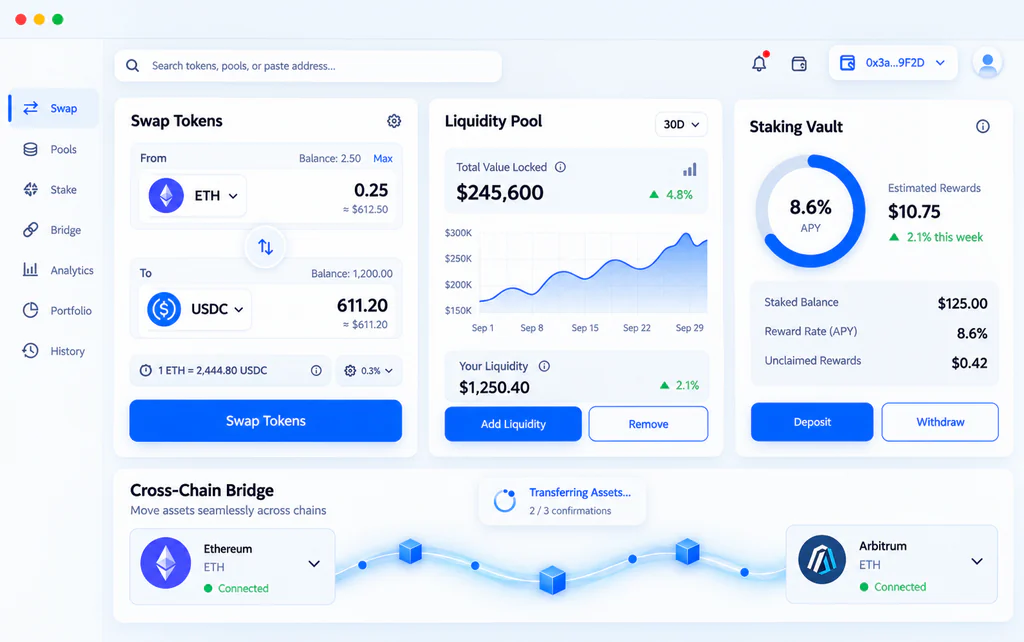
Illustrative interface, not a client screenshot.
Identity-gated transfers with on-chain compliance checks, a claims registry and automated holder distributions.
Illustrative interface, not a client screenshot.
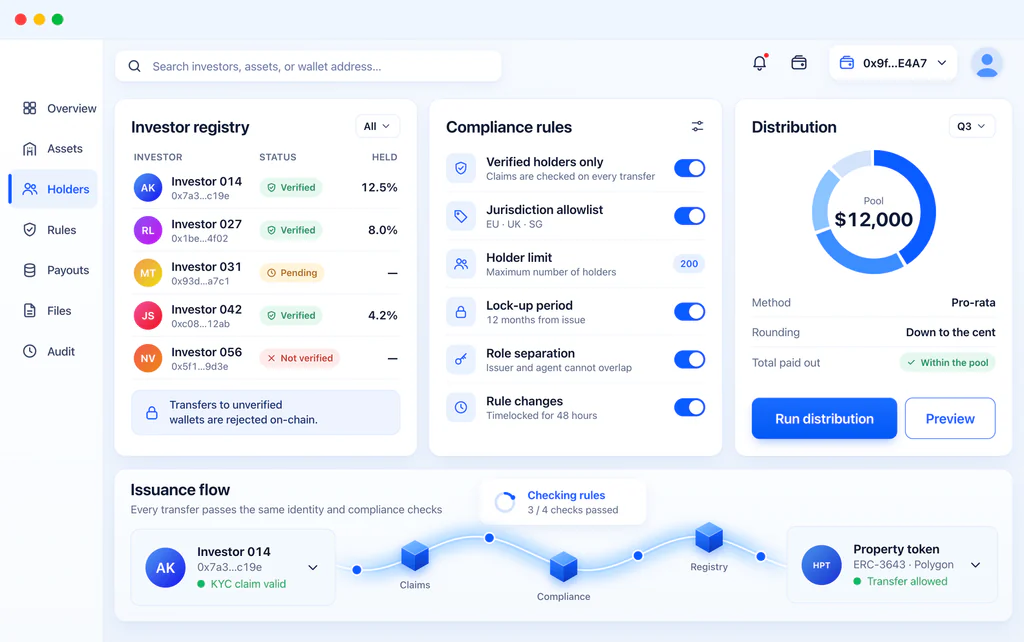
Illustrative interface, not a client screenshot.
Threshold-signature vaults with per-transaction spend policies and hardware-backed keys, on web and mobile.
Illustrative interface, not a client screenshot.
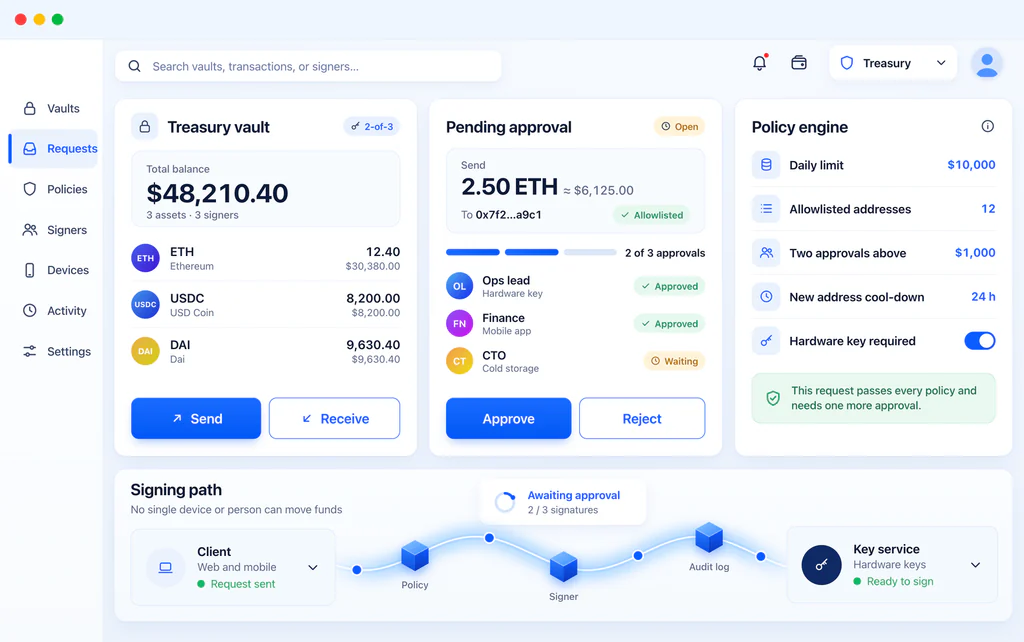
Illustrative interface, not a client screenshot.
Hybrid retrieval over a chunked corpus, with a tool-calling agent and a human approving every write.
Illustrative interface, not a client screenshot.
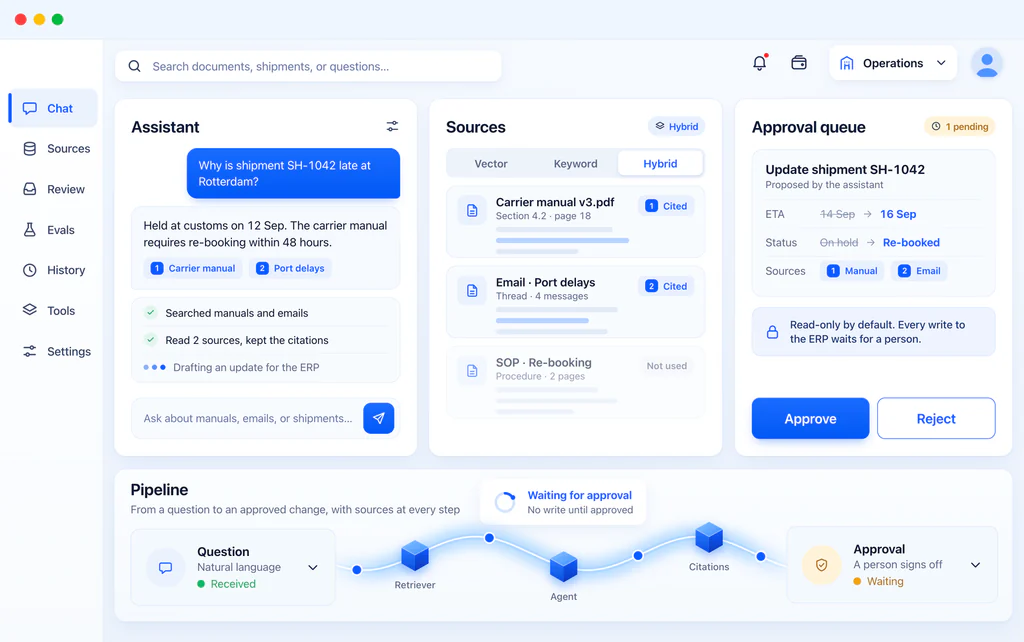
Illustrative interface, not a client screenshot.
We pick the stack that fits your product and your team, and explain why in writing.
Solidity or Vyper on EVM chains, Rust with Anchor on Solana. Foundry runs the tests and scripts; Hardhat where your repo already uses it.
 Solidity
 Rust
 Anchor
 Vyper
 Foundry
 Hardhat
Static analysis, fuzzing, invariant suites and fork tests run first, so the line-by-line review is spent on logic rather than typos.
 Slither
 Echidna
 Foundry invariants
 Fork testing
 Manual review
Python services around hosted or open models, with retrieval in the Postgres you already run.
 Python
 FastAPI
 LangChain
 pgvector
 LLM APIs & open models
TypeScript from end to end: web, mobile and APIs on one typed codebase, running on AWS.
 TypeScript
 Next.js
 React Native
 Node.js
 PostgreSQL
 AWS
Ethereum, its L2s and Solana, with proven standards and infrastructure in place of home-made versions.
 EVM chains
 Solana
 LayerZero
 Chainlink
Every engagement begins with a short conversation and a written scope.
A short engagement to turn an idea into a buildable plan.
End-to-end delivery against an agreed scope and milestones.
Independent review of contracts you have already written.
Continued development, upgrades and support after launch.
Blockchain products that hold real value (DeFi, tokenization, stablecoins, wallets, exchanges) and AI systems that connect to real business tools. We also review and harden contracts other teams have written.
Senior engineers throughout. The people who scope your project design and build it, so nothing is lost between the first call and the code.
EVM chains (Ethereum and its L2s, Polygon, BNB Chain, Avalanche) and Solana. If your idea fits a different chain better, we will say so before you spend money.
After a short discovery and a written scope. You get a range with the assumptions spelled out, not a number on a first call.
It depends on scope. Discovery gives you a written plan with milestones; a focused contract system takes weeks, a full platform takes months.
We review and test contracts thoroughly, ours and yours. For a launch that will hold significant value we still recommend an independent audit on top; our work makes it shorter and cheaper.
You do. Code, tests and documentation live in your repository from the start.
Client names stay private under NDA. We share architectures and can walk through code structure and test approach on a call.
Tell us what you are building and what must not go wrong. An engineer who would work on it will reply.


